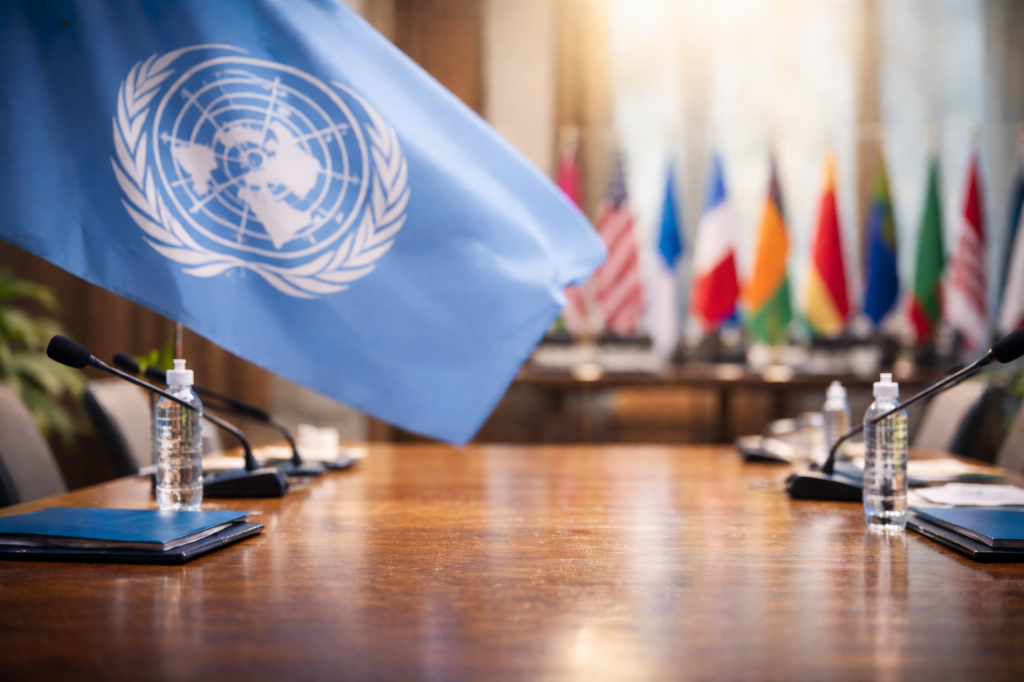
As of May 2023, the international system is experiencing a profound “peace fatigue” shaped by overlapping crises and protracted conflicts. The war in Ukraine continues with no clear end in sight, chronic instability persists across the Middle East, insecurity deepens in parts of Africa, and tensions in the Asia-Pacific are hardening into more rigid fault lines. Against this backdrop, the United Nations’ capacity to protect and sustain international peace is being questioned with increasing urgency.
This scrutiny is not an argument against the ideal of peace that the United Nations embodies. On the contrary, it is a peace-oriented critique: a demand to understand why a mission as essential as global peace remains so difficult to translate into effective outcomes. For those who genuinely prioritize peace, intentions matter—but results matter more.
In principle, the United Nations represents the most inclusive and legitimate institutional framework for global peace. In practice, however, structural weaknesses—particularly within the Security Council—have steadily eroded that promise. The veto power held by the permanent members too often turns peace into a hostage of great-power competition, limiting action not to what is necessary, but to what is politically tolerable. As a result, crises are frequently “managed” or frozen, rather than prevented or resolved.
One of the most visible shortcomings is the weakness of early warning and preventive diplomacy. Too often, conflicts become a priority only after violence has already escalated and humanitarian suffering has become entrenched. Yet peace is not something to be assembled in the middle of a fire—it must be built before the spark becomes a blaze.
Another persistent gap lies in the distance between decision-making processes centered in New York and the realities on the ground. UN missions are sometimes designed with insufficient sensitivity to local dynamics, which can undermine legitimacy in the eyes of the very communities they aim to protect. Peace cannot be imposed as an external arrangement; it must be co-created with local actors, institutions, and societies.
None of these criticisms imply that the United Nations is unnecessary. In fact, the absence of any alternative global platform with comparable legitimacy makes the UN more indispensable than ever. But being indispensable should not mean being beyond criticism. If anything, it demands a higher standard of accountability and effectiveness.
In today’s world, peace is not merely the silence of weapons. It also requires justice, fairness, and the restoration of trust. While the United Nations embraces this broader understanding in its rhetoric, its ability to implement it often remains constrained by power politics. This disconnect fuels frustration among societies that want peace—not as a slogan, but as a lived reality.
Ultimately, the UN’s greatest test in 2023 is the gap between representing peace and producing peace. From a peace-driven perspective, the purpose of critique is not to weaken the institution, but to push it toward being more courageous, more inclusive, and more effective. International peace is not an ideal that can be postponed—every delay carries a human cost, and that cost is already too high.
 Ahmet Tümer