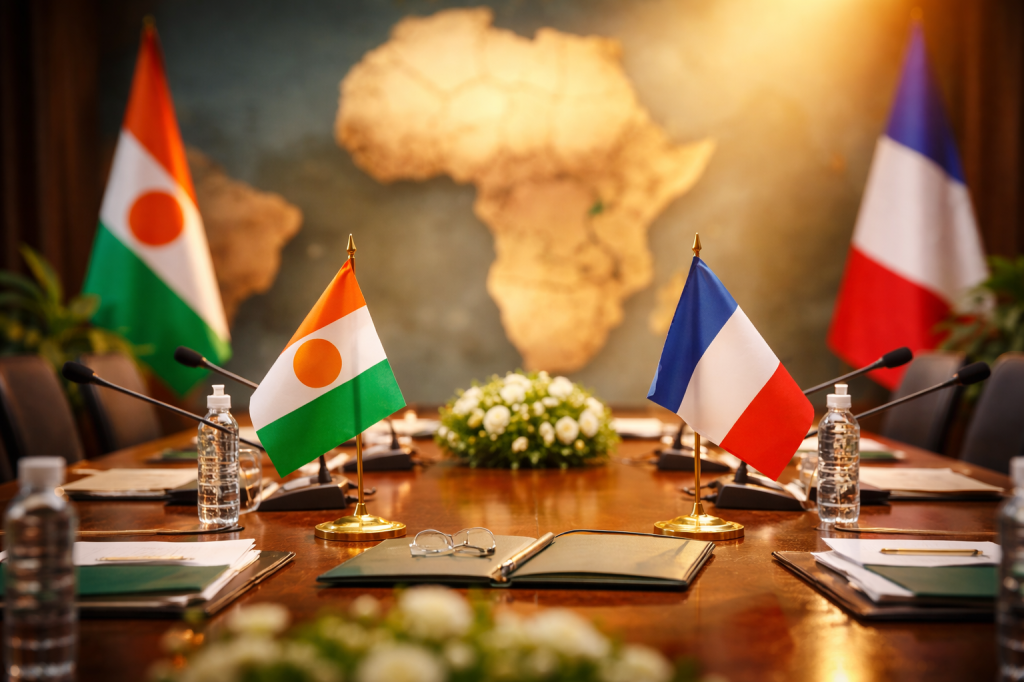
The wave of military coups across Africa’s Sahel belt in recent years should be understood not only as a series of domestic political ruptures, but also as an expression of shifting balances in the international system. When Niger’s 2023 coup is read alongside similar trajectories in Mali and Burkina Faso, it becomes clear that trust between local societies and Western partners has been steadily eroding.
This reality is often reduced to sharp slogans such as “anti-Western sentiment” or “France’s expulsion from the region.” Yet from a peace-oriented perspective, what is unfolding in the Sahel points to a deeper and more uncomfortable question: was security actually delivered, or was security mostly performed as a political narrative?
France’s military presence in the Sahel was formally framed around counterterrorism and regional stabilization. However, the prevailing perception on the ground increasingly suggested that such presence did not strengthen local security as promised, but rather deepened dependency and widened the distance between governments and their societies. The spread of insecurity despite years of operations, concerns over civilian harm, and the steady decline of legitimacy for political leadership all contributed to the growing criticism directed at France.
At this point, it is essential to be clear: adopting a peace lens does not mean legitimizing coups or defending military rule. But it also means avoiding the reflex to dismiss public frustration as mere “manipulation” or an “external plot.” The coup wave in the Sahel is, to a significant extent, the result of unmanaged security threats and unmet expectations—especially where daily life has remained insecure and economic hardship has persisted.
In my view, the central issue is not simply France’s loss of influence. The deeper problem is that international actors have struggled to offer Sahelian societies a credible, inclusive, and sustainable language of peace. Temporary control secured through military tools rarely translates into lasting stability when political realities, social cohesion, and local ownership are not placed at the center. Over time, that gap fuels resentment and can push public sentiment toward more rigid and radical positions.
The region’s emerging geopolitical reorientation—toward Russia, China, or other actors—should therefore be read less as an ideological shift and more as the outcome of a search. That search is not simply about “who is stronger,” but increasingly about “who can genuinely contribute to peace and stability.” Unfortunately, the international community has not yet produced an answer that is both convincing and durable.
Peace cannot be built through counterterrorism operations alone. It requires political inclusion, economic fairness, and treating local actors as genuine partners rather than passive recipients of externally designed security agendas. The Sahel today is not only a test of great powers’ capabilities, but also a test of their diplomatic patience—and their ability to approach societies with empathy and strategic humility.
Ultimately, interpreting Africa’s coup wave solely through the lens of France’s declining influence is an incomplete reading. The deeper challenge is the need to rebuild a viable peace architecture in the Sahel—one that moves beyond imposed security and toward shared stability. Unless international engagement shifts from “delivering security” to “co-creating peace,” instability will continue to reproduce itself, only through different actors and new alignments.
 Ahmet Tümer