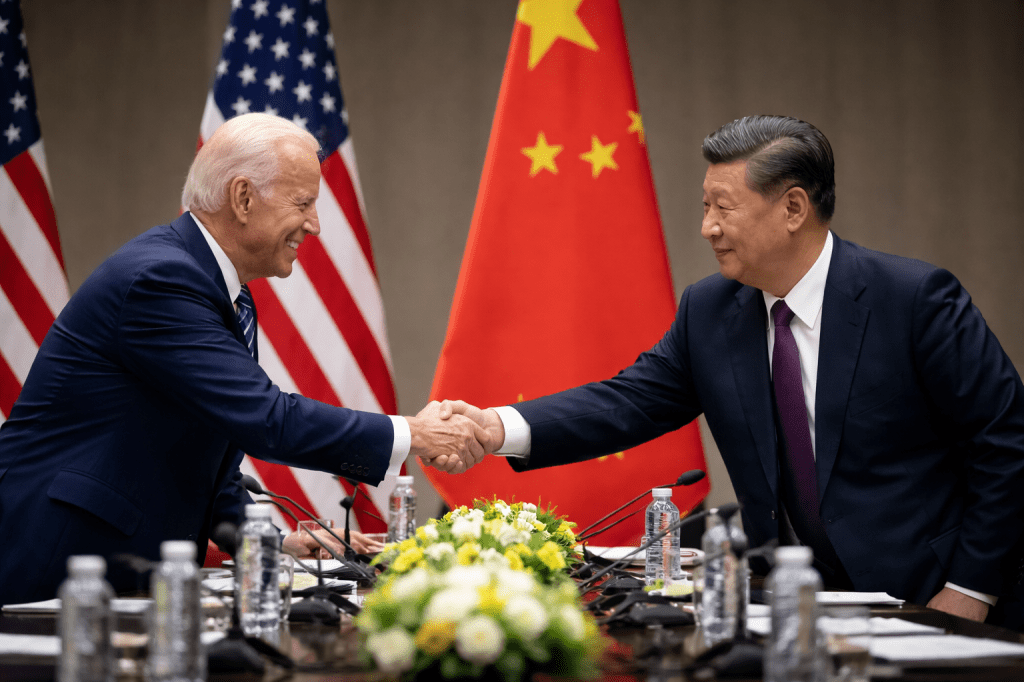
Over the past several years—especially after 2018—U.S.–China relations were often defined by trade disputes, technology restrictions, heightened Indo-Pacific security dynamics, and intensifying rhetoric. In such a climate, communication channels tend to narrow, crisis perception becomes distorted, and the risk of miscalculation grows. For this reason, the return of sustained diplomatic contact in 2023 should be understood as an investment in predictability—an essential ingredient for global peace.
Key Dates That Marked the Diplomatic Reopening
A notable signal came with Secretary of State Antony Blinken’s visit to Beijing in June 2023. After a prolonged period in which high-level exchanges had repeatedly stalled, this visit helped restore a basic diplomatic rhythm. The significance was not that tensions disappeared—but that both sides acknowledged the practical necessity of keeping lines open.
The process continued with Treasury Secretary Janet Yellen’s visit in July 2023, followed by Commerce Secretary Gina Raimondo’s trip in August 2023. These engagements, focused on economic and commercial issues, reinforced a simple reality: geopolitical rivalry between the world’s two largest economies inevitably shapes global markets, supply chains, and the strategic calculations of third countries. Diplomacy here becomes not an act of goodwill alone, but a stabilizing mechanism for the broader international environment.
The most consequential moment arrived with the Biden–Xi meeting in San Francisco in November 2023. Beyond symbolism, the meeting carried practical implications, including steps toward restoring military-to-military communication—an area that matters profoundly when the global system is already vulnerable to misunderstandings and unintended escalation.
Why This Matters for Peace and Confidence
Diplomacy does not require friendship. Its primary purpose—especially between strategic competitors—is to prevent rivalry from sliding into uncontrolled confrontation. In that sense, the 2023 diplomatic reopening can be seen as a modest but meaningful contribution to global peace. It reduces ambiguity, clarifies intentions, and creates room for crisis management.
I approach this development with a deliberately good-faith lens. Not because structural competition has vanished—clearly it has not—but because the world has too much to lose when the strongest actors communicate only through pressure, deterrence, and public messaging. When dialogue collapses, fear fills the gap. When dialogue returns, even partially, it restores a minimum level of strategic restraint.
Importantly, the benefits of U.S.–China diplomacy are not confined to Washington and Beijing. Third countries, regional organizations, and global markets all operate under the shadow of U.S.–China tensions. When those tensions are managed through direct contact, the international system gains breathing space. Global peace is sometimes preserved not by grand agreements, but by preventing major crises from erupting.
Conclusion
The diplomatic engagement reactivated in 2023 did not resolve the deep-rooted disagreements between the United States and China. But it signaled something increasingly rare: a recognition that rivalry must be governed, not glorified. In an era when good-faith gestures are scarce and trust is fragile, keeping diplomacy alive is itself a strategic contribution to peace.
For those of us who still prioritize an international order shaped by stability and confidence, the resumption of U.S.–China diplomatic contact in 2023 should be treated as a cautious yet valuable step in the right direction.



 Ahmet Tümer