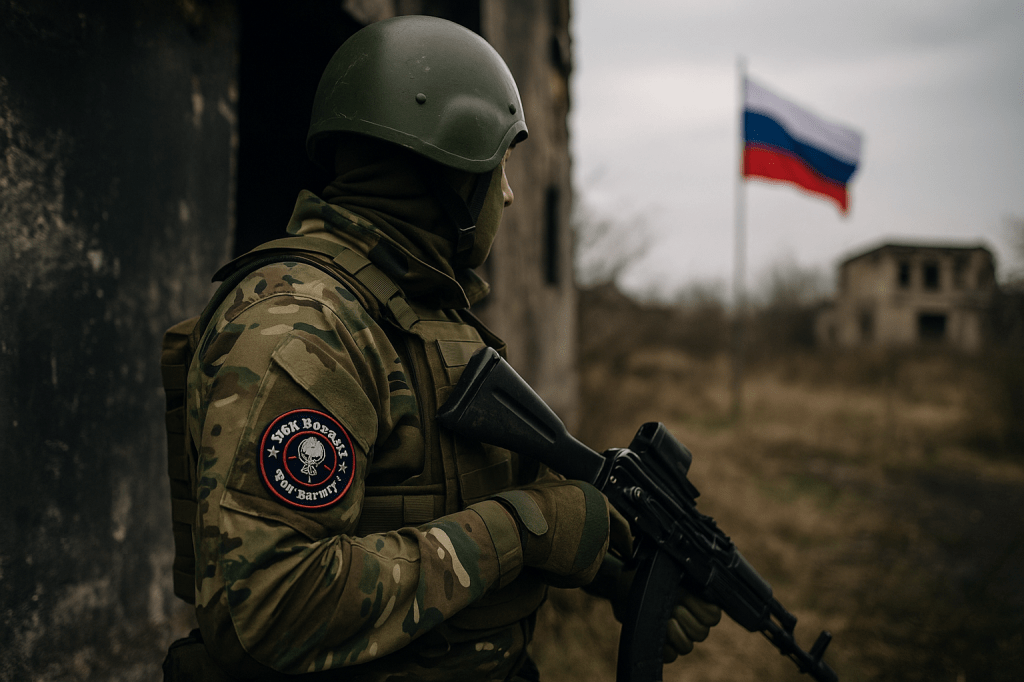
Summary of the Event and Its Development
On 23 June 2023, Yevgeny Prigozhin, leader of the Wagner Group, released a video criticizing the inadequate logistical support on the front line and calling for the government to be held accountable “for justice.” Prigozhin claimed that approximately 25,000 fighters were ready to march from Rostov-on-Don toward Moscow and began what he described as a march for retribution.
The insurgents seized control of the area around Rostov by midday on Saturday but were unable to reach Moscow. Through the mediation efforts of Alexander Lukashenko, an agreement was reached under which Wagner forces withdrew; the Kremlin announced that Prigozhin would be exiled to Belarus and that charges against him would be dropped. Thus, the 36-hour uprising ended without bloodshed and did not escalate into nationwide conflict.
State Capacity and Regime Stability
While the suppression of the revolt challenged the perception of weakness highlighted by some observers, the state emerged relatively strong from this crisis. The regime demonstrated its capacity for control by resolving the mutiny without major clashes, and Wagner fighters were partially disarmed before being relocated to Belarus. Following Prigozhin’s death, all Wagner personnel were required to swear allegiance to Russia, effectively reintegrating the private force into the state’s security framework.
A significant segment of the military remained loyal to the government, while several commanders linked to Wagner were quietly removed. Putin seized the moment to strengthen internal security by authorizing new heavy weapon allocations to the National Guard, bolstering deterrence against future uprisings. While no widespread unrest materialized, the Kremlin maintained—and in some respects reinforced—its political standing.
Nonetheless, the mutiny undeniably impacted the regime. Analysts highlighted internal factional tensions within the Kremlin and argued that Putin’s authority suffered reputational damage. U.S. Secretary of State Antony Blinken described the uprising as creating “real cracks” in the leader’s authority, while French President Emmanuel Macron emphasized that divisions within the Russian military exposed its structural fragility.
Several Western analysts wrote that the events raised serious questions about the long-term stability of the Putin regime. Some warned that failure to decisively punish Prigozhin could endanger Putin’s position, while others argued that although the system held, it was clearly more vulnerable than before.
Geopolitical Implications
The Wagner mutiny had limited direct impact on the Ukrainian battlefield. Analysts noted that Wagner units were primarily organized as specialized assault forces and had withdrawn from the Bakhmut operation shortly before the mutiny, meaning the uprising produced no immediate change in trench dynamics.
Nevertheless, the incident created diplomatic ripple effects in Russia’s foreign relations. China framed the developments as “Russia’s internal affairs” and expressed support for Moscow’s efforts to maintain stability. The Chinese Ministry of Foreign Affairs reaffirmed its backing for Russia’s pursuit of national unity, while Chinese strategists viewed the crisis as an internal split within the Kremlin and warned that a weakened Putin could undermine China’s long-term strategic positioning.
Meanwhile, NATO states debated the broader implications. Statements from France and the United States reinforced perceptions of vulnerability within the Russian military, while many analysts remained cautious about how these weaknesses would shape Moscow’s future foreign policy behavior. Ultimately, the Wagner crisis presented allies and adversaries alike with new questions about the resilience and internal coherence of Putin’s rule.
The Role of Private Military Companies Within the State
Private military companies (PMCs) are typically employed by states to support military objectives. Russia’s Wagner Group, formed during the 2014 Donbas campaign, has operated as a proxy force across Ukraine, Syria, Libya, and parts of Africa. Despite lacking official legal status, Wagner functioned as a paramilitary extension of the Kremlin, financed and directed with political objectives in mind.
However, the inherently flexible and profit-driven nature of PMCs can produce significant security risks. Experts argue that forces capable of acting independently of state authority must be replaced—or strictly subordinated—to regular armed forces, supported by compulsory service where applicable.
In many respects, the Wagner uprising represents the first instance of a private military company launching a mutiny in modern Russian history. This episode underscores the strategic consequences of relying on semi-autonomous paramilitary groups and highlights the critical importance of strict oversight within state security structures.

 Ahmet Tümer