As seen on the map, the Central Asian region consists of Kazakhstan, Kyrgyzstan, Tajikistan, Turkmenistan, and Uzbekistan, and borders Afghanistan to the south. In the post-Soviet period, the expansion of religious freedoms has fueled radical tendencies among certain segments of society. For instance, between 2010 and 2016, Kyrgyz security authorities reported that 863 of their citizens had participated as foreign fighters in Syria and Iraq.
Within this framework, foreign fighters originating from Central Asia joined the Iraq–Syria jihad in the thousands, posing a potential threat to the region. Indeed, between 2012 and 2018, more than 4,000 individuals participated in armed conflicts, making Central Asia the third-largest source of jihadist fighters. By 2015, approximately 1,400 of these fighters (around 500 of whom were Uzbek nationals) were actively fighting in Syria and Iraq; in subsequent years, the total number of Central Asian foreign fighters reached between 5,000 and 6,000.
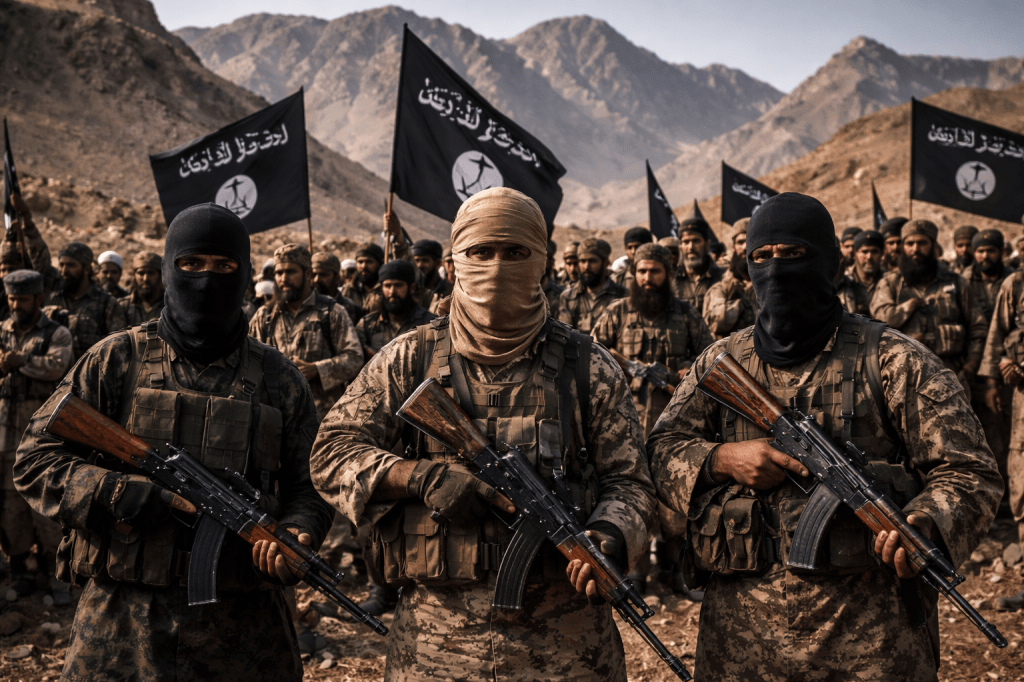
As a result of these conflicts, Uzbek-origin militant groups such as Katibat Imam Bukhari (KIB) and Katibat al-Tawhid wal Jihad assumed significant roles, while northern Afghanistan and border regions of Central Asia provided these groups with operational bases.
Although Central Asian countries have not experienced large-scale terrorist attacks to date, they remain concerned about threats originating outside the region. An Israel-based analysis noted that major attack attempts targeting Central Asia in 2023 originated not from Afghanistan, but from Russia and Iran, emphasizing that militants under the Islamic State Khorasan (ISK) umbrella were planning operations in both countries.
In reality, in 2022, militants in the Kandahar region launched rocket attacks just beyond the Afghan border, targeting the Uzbek border city of Termez and areas of Tajikistan. Following these attacks, ISK released a statement in Uzbek declaring a “major jihad against Central Asia.”
Meanwhile, the number of militants of Tajik origin has increased rapidly; most of those killed in the March 2024 attack in Moscow were Tajik nationals. International observers have emphasized that these attacks signal a shift in ISK’s strategy, highlighting the rapid recruitment of Central Asian—particularly Tajik—militants and the planning of new operations.
Participation of Regional Citizens
Many young individuals of Kyrgyz, Kazakh, and Uzbek origin have been linked to radical organizations. For example, a United Nations report indicated that at least 863 individuals from Kyrgyzstan had participated as fighters in conflict zones by 2016. Similarly, hundreds of individuals from Kazakhstan and other Central Asian states joined jihadist groups centered in Damascus and Baghdad.
In particular, Uzbek-origin groups such as KIB and KTJ have played active roles in Syria for years, maintaining ties with al-Qaeda and gaining substantial battlefield experience. During this period, Tajik and Uzbek militants from northern Afghanistan and surrounding areas also rose within ISK ranks, playing significant roles in attacks in Iran and Russia.
Consequently, the return of large numbers of Central Asian fighters poses a serious risk, as they may transfer their combat experience into domestic violence within the region.
Organizational Structures of Terrorist Groups and the Risk of Expansion
Both ISIS-affiliated and al-Qaeda-linked groups are striving to expand their influence in Central Asia. ISK, the Afghan branch of ISIS, has recruited heavily from Kyrgyz, Kazakh, Uzbek, Tajik, and Uyghur minorities, forming alliances with anti-regime militants.
At the same time, transnational organizations such as Hizb ut-Tahrir and pro-Taliban local actors continue to pose destabilizing risks. In recent years, some Central Asian suspects arrested in Türkiye, Europe, and the Middle East were identified as members of ISIS- or al-Qaeda-linked cells.
For instance, in 2024, a cell dismantled in Istanbul was reported to be led by a Tajik national, with members consisting of a Tajik-Uzbek duo. This demonstrates that individuals radicalized through education or labor migration may engage in both external attacks and domestic organizational activities upon returning to the region.
Regional Measures and Warnings
States such as Kazakhstan, Kyrgyzstan, and Uzbekistan are increasingly aware of this threat. In November 2023, a member of the Kazakh parliament warned about the spread of movements “outside traditional Islam.” Similarly, the head of Kyrgyz intelligence acknowledged the infiltration of “foreign ideologies” into the country.
At a meeting held near Samarkand, Uzbek Prime Minister Aripov and security officials emphasized that a new wave of religious radicalization represents a “persistent and burning issue.” Security forces have intensified preventive operations; in 2024, Kazakhstan’s National Security Committee detained 23 individuals during raids on 49 radical cells and prevented two planned attacks.
During the same period, Kyrgyz authorities reported dismantling 15 ISIS-linked cells. Similar operations have continued in Tajikistan and Turkmenistan. While these measures are significant, experts warn that authoritarian repression may fuel radicalization, emphasizing the need to balance security operations with civil society engagement.
Warnings and Future Assessment
In light of these developments, several critical warnings can be issued to Central Asian governments:
Attention to Cross-Border Threats: Groups such as ISK are no longer limited to Afghanistan and are now targeting Russia, Iran, and Europe. For example, the March 2024 Moscow attack, which killed 133 people, was claimed by ISIS-Khorasan, with the perpetrators identified as Tajik nationals.
Returning Foreign Fighters: Thousands of Central Asians previously fought within ISIS ranks. Those detained in camps or deported may destabilize domestic security upon return, necessitating enhanced screening and reintegration programs.
Preventing Radicalization and Protecting Human Rights: While strict security measures are essential, restricting political freedoms may intensify radicalization. Governments should pursue fair policies and social inclusion, strengthening education systems that promote tolerance and youth employment to counter extremist propaganda.
International Cooperation: Strengthening intelligence sharing and border controls among Central Asian states is crucial. Counterterrorism exercises and legal cooperation should be enhanced through mechanisms such as the Shanghai Cooperation Organisation and the United Nations. Expanding cooperation with external partners, including the United States, Europe, and China, can help disrupt ISIS-linked financing and arms flows.
Conclusion
As of 2024, the threat of extremist jihad in Central Asia has not yet translated into widespread domestic attacks; however, the expansion potential of external organizations remains high. In particular, Central Asian fighters with experience from the Syria-Iraq war and the presence of ISIS-K in Afghanistan pose long-term threats to societal security.
Regional states must remain vigilant, preventing radicalization through social policies while maintaining firm security measures. This analysis aims to warn Central Asian governments against this evolving threat.


 Ahmet Tümer