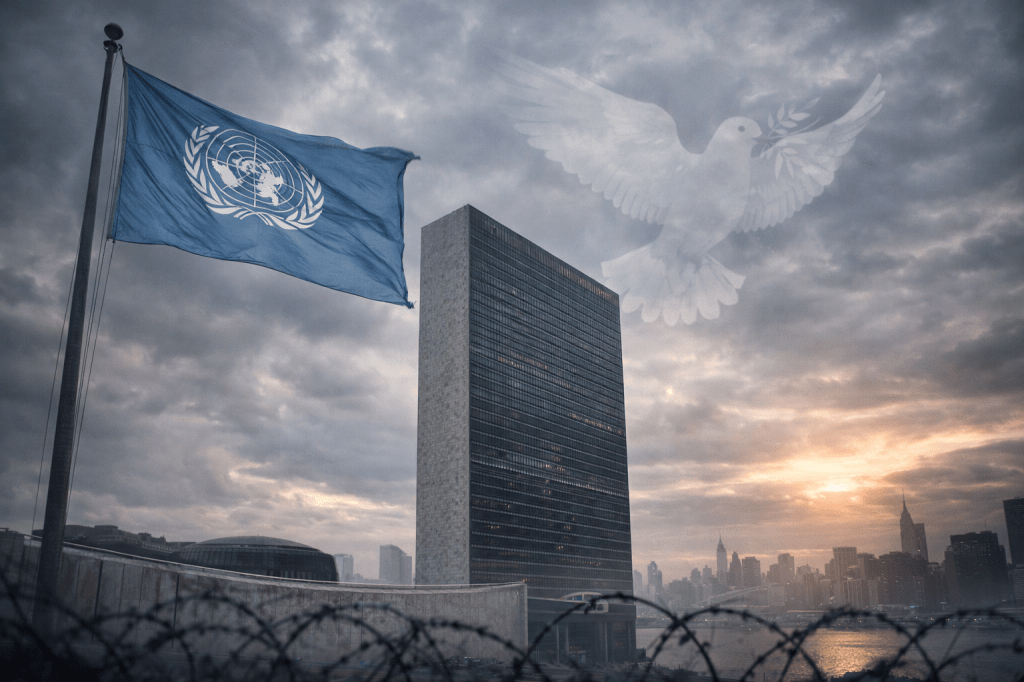
In 2024, the United Nations remains at the center of almost every major international crisis—yet rarely at the center of their resolution. From armed conflicts to humanitarian emergencies, the organization is present, vocal, and active. What is increasingly absent, however, is a sense that these engagements are translating into durable peace.
The UN’s approach in recent years has leaned heavily toward crisis management. Statements are issued, emergency sessions convened, and humanitarian corridors discussed. These actions matter, but they often function as containment rather than transformation. The underlying political conditions that generate conflict are addressed cautiously, if at all, constrained by institutional limits and power dynamics within the system.
This pattern is not new, but in 2024 it has become more visible. The Security Council remains paralyzed by veto politics, turning peace into a negotiable outcome rather than a collective obligation. Preventive diplomacy—long emphasized in UN doctrine—continues to receive rhetorical support while remaining operationally underpowered. As a result, the organization reacts to crises it once claimed it could help prevent.
From a peace-oriented perspective, this gap between mandate and impact is deeply troubling. Peacebuilding is not a luxury that follows stability; it is a prerequisite for it. Yet peacebuilding efforts are frequently sidelined in favor of short-term stabilization measures that address symptoms without confronting causes.
Another challenge lies in credibility. When the UN speaks forcefully in some crises and cautiously in others, perceptions of selectivity intensify. This inconsistency undermines trust in the UN as a neutral guardian of international peace.
None of this suggests that the United Nations is irrelevant. The absence of any alternative global platform with comparable legitimacy makes the UN indispensable. But indispensability should not shield the institution from critique.
In 2024, the UN’s central challenge is not capacity, but courage—courage to prioritize prevention over reaction, and peacebuilding over containment.
If the United Nations is to remain a meaningful pillar of global peace, it must move beyond managing instability and reclaim its role as an architect of peace.

 Ahmet Tümer