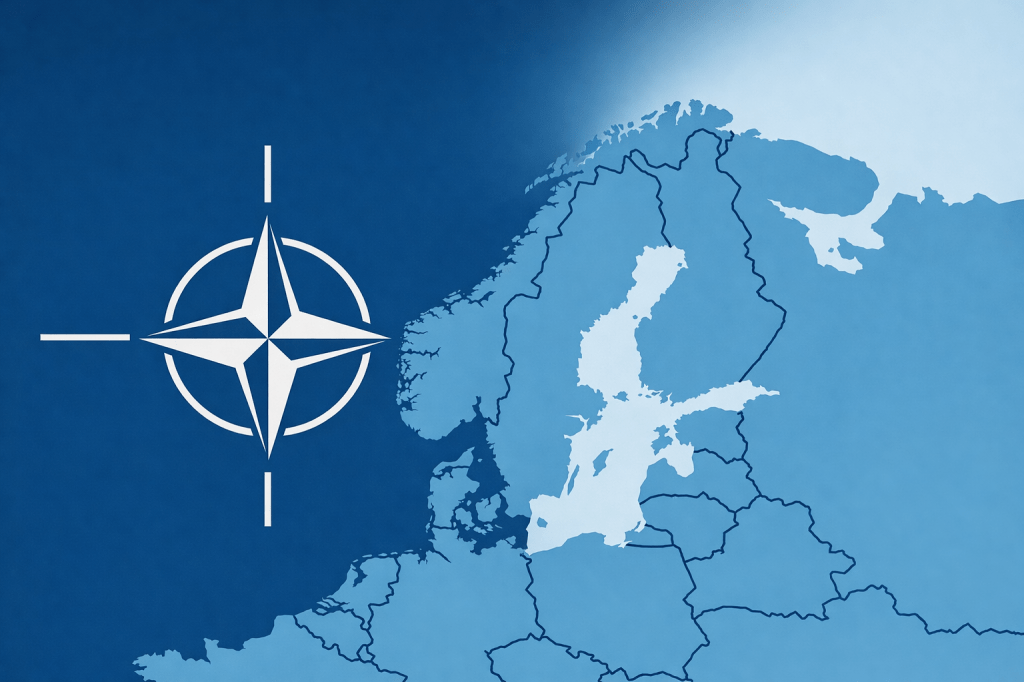
Russia’s large-scale invasion of Ukraine in February 2022 triggered radical changes in the European security architecture. The most important of these developments was the decision of Sweden and Finland, which had pursued a policy of military neutrality for many years, to apply for NATO membership. This step redefined the role of the Nordic countries within the Alliance while provoking strong reactions from Russia. Below, the place of Scandinavia in NATO’s enlargement strategy in recent years; the accession processes and justifications of Sweden and Finland; Russia’s responses through rhetoric, military posture, and energy diplomacy; and the attitudes of Alliance members (especially Türkiye) are analyzed. Finally, medium- and long-term foreign policy recommendations are presented regarding the preservation of regional stability, the maintenance of a balance of deterrence, energy security, and diplomatic engagement.
NATO’s Enlargement Policy in Recent Years and the Place of the Nordic Countries
After the Cold War, NATO continued its expansion toward Eastern Europe under the “open door” policy and incorporated many countries, including the Baltic republics, in 2004. From the 2014 Wales Summit onward (following the annexation of Crimea), the Alliance once again refocused on collective defense. In particular, Russia’s war launched against Ukraine in 2022 gave new momentum to the strengthening of NATO’s deterrence and defense posture. In its 2022 Strategic Concept, the Alliance defined Russia as “the most significant and direct threat to the security of the Allies” and adopted a forward defense approach on its eastern flank. Within this framework, NATO reaffirmed its open door policy and invited Finland and Sweden to join the Alliance (Madrid Summit, June 2022). With the new regional defense plans approved at the Vilnius Summit in 2023, an integrated defense architecture encompassing the whole of Northern Europe was created.
With the accession of Finland and Sweden, a historic threshold was crossed: for the first time in centuries, all Nordic countries came together within the same military alliance. This development significantly strengthened NATO’s northern flank. The Baltic and Nordic region can now be defended as a single geostrategic whole. Experts emphasize that with this accession, NATO’s geographical depth and military deterrence capacity have increased and that, in particular, the defense of the Baltic states and Poland has been reinforced. Indeed, NATO leaders have also declared that the accession of Finland and Sweden to the Alliance has made the Allies safer and has made the Alliance stronger, especially in the High North (Arctic) and the Baltic Sea. This enlargement has also doubled NATO’s direct border with Russia, bringing it to approximately 2,600 km (with Finland’s accession). The Arctic/High North region has likewise come to occupy a more central place on NATO’s agenda. Secretary General Jens Stoltenberg has stated that, in the face of Russia’s growing military presence in the region and China’s search for influence in the north, NATO needs to increase its presence in the Arctic. With the accession of Sweden and Finland, the Alliance has consolidated its geopolitical position in the High North and has begun to review its preparedness against risks in this area.
Sweden and Finland’s Accession Processes: Political and Military Justifications
Russia’s attack on Ukraine marked the end of decades of neutrality for Sweden and Finland. Moscow’s aggressive posture and the appeal of NATO’s collective defense guarantee (Article 5) pushed both countries to radically change their security policies after February 2022. In May 2022, Finland and Sweden, in close coordination, applied for NATO membership at the same time, thereby shielding one another against possible retaliation from Russia. This decision represented a radical break in the security doctrines of both countries; for remaining militarily non-aligned had been part of their identity since the Cold War. However, the Russian threat reversed this stance at both societal and governmental levels: for example, in Finland, support for NATO membership rose from 24% at the beginning of 2022 to 82% in May 2022, and in Sweden from 35% to 58%. This dramatic transformation in society and politics reflected the belief that existing neutrality policies would be inadequate in the face of the threat emanating from Russia.
The accession process involved different challenges for the two countries. At the Madrid Summit (June 2022), NATO formally invited both to join the Alliance. Finland obtained the approval of all Allies relatively quickly and became the 31st member of the Alliance on 4 April 2023. For Sweden, the process took longer; in particular, Türkiye and Hungary caused delays in their national approval procedures regarding Sweden’s membership. Ankara declared that it expected more concrete steps from Sweden in the fight against terrorist organizations (especially the PKK and FETÖ, which is associated with the 2016 coup attempt) and, in order to address these concerns, a trilateral memorandum of understanding was signed at the 2022 Madrid Summit. Throughout 2022–2023, the Stockholm government took steps such as tightening counterterrorism laws, considering certain extradition requests, and lifting the arms embargo on Türkiye. Finally, after intensive diplomatic negotiations, President Recep Tayyip Erdoğan announced, on the eve of the Vilnius Summit, that he would submit the Swedish protocol to parliament for approval (July 2023). This historic step was welcomed by Swedish Prime Minister Ulf Kristersson as “a good day for Sweden.” Subsequently, the U.S. administration announced that it would submit to Congress the sale of F-16 fighter jets long requested by Türkiye, in a move that reinforced Ankara’s change of stance. Hungary also lifted its objection after Türkiye signaled its approval, and Sweden became NATO’s 32nd member on 7 March 2024.
The political justification for Sweden and Finland’s move toward NATO membership is the desire not to be left alone in the face of the threat posed by neighboring Russia. Although both countries are currently members of the European Union, they viewed the security umbrella provided by NATO as indispensable, due to the limitations of the EU’s collective defense mechanisms. From a military perspective, these two countries have joined NATO not merely as consumers but as important contributors (net contributors). Finland, with its strong conventional land forces (including one of Europe’s largest artillery inventories), large pool of reserve forces, and procurement of new F-35 fighter jets, makes a significant contribution to the Alliance’s deterrence. Sweden, for its part, has a technologically advanced military; with modern air forces (Gripen jets and Patriot air defense systems), an advanced submarine fleet, and deployment on the strategically important island of Gotland, it will strengthen NATO’s defense in the Baltic Sea. Indeed, according to expert assessments, the intelligence experience, geographic position, and military capabilities of Sweden and Finland will provide NATO with a significant advantage against Russia’s activities in the region. In summary, these memberships have both alleviated the security concerns of the countries in question and increased NATO’s collective defense capacity.
Russia’s Reaction: Rhetoric, Military Posture, and Energy Diplomacy
Russia has for many years defined NATO enlargement as a threat to its national security. The Kremlin claims that the promises made to the Alliance after the dissolution of the Soviet Union were broken and presents NATO’s eastward expansion as a historical injustice and a violation of its security. This rhetoric also serves the purpose of creating a “besieged fortress” psychology at home and rallying the population around the state against the West. Indeed, when he invaded Ukraine in early 2022, President Vladimir Putin tried to legitimize his war by claiming that Ukraine was eager for NATO membership and that the approach of NATO infrastructure to the Russian borders violated “red lines.” Therefore, the move by Sweden and Finland toward NATO membership is, from Moscow’s perspective, both a strategic failure and a development that complicates its propaganda narrative (Russia’s aggression has forced NATO to enlarge).
Russia’s reaction to the membership decisions of Sweden and Finland has been multi-dimensional. Initially, Moscow adopted a relatively cautious rhetoric; in the first months of the war, during a meeting with the President of Finland, Putin sent a soothing message by saying that “NATO enlargement does not constitute a direct threat to us.” However, this statement is striking in that it contradicts the “NATO threat” arguments put forward by Russia in the context of Ukraine. Indeed, shortly thereafter, the Kremlin emphasized that Russia’s reaction would depend on whether NATO military infrastructure would be deployed on Swedish and Finnish territory. On the other hand, harsher statements also came from Russian officials: Deputy Foreign Minister Sergey Ryabkov described the NATO membership of Finland and Sweden as “a mistake with far-reaching consequences” and argued that it would escalate tensions. Former President Dmitry Medvedev and other officials announced that they could deploy nuclear-capable missile systems and hypersonic weapons in the Kaliningrad region. Military experts point out that Russia has had such threats at its disposal for years, and therefore these statements do not significantly alter the strategic balance.
Russia has also taken certain concrete military and political steps. Due to the intensity of the war in Ukraine, most of Moscow’s conventional forces are focused on the front, so the risk of a direct military provocation against Finland or Sweden appears limited. Nevertheless, it is considered possible that Russia may resort to limited-scale harassing military activities: violations of the airspace of both countries by Russian aircraft, small-scale exercises or troop movements near the border, and even attempts to create instability through hybrid methods such as cyberattacks and refugee crises are all possible. Indeed, parallel to the accession process, an increase has been observed in disinformation campaigns and cyberattacks originating from Russia; Kremlin-affiliated media have tried to undermine public support for NATO membership in Sweden and Finland and to create distrust toward the Swedish government by exaggerating Türkiye’s demands regarding Kurdish organizations. Russia has also sought to deepen fault lines within NATO and has intensified its diplomatic contacts with Türkiye. Putin met with President Erdoğan in May 2022; during this period, the Russian press gave extensive coverage to Turkish criticisms that “Sweden supports the PKK,” thus attempting to encourage Ankara’s veto. However, this effort proved fruitless once Türkiye eventually reached an agreement.
One of the areas in which Russia’s reaction has been most clearly felt is energy diplomacy. Moscow has long used energy supplies to European countries as an instrument of foreign policy. When Finland and Sweden announced their decisions, Russia swiftly deployed this lever: only a few days after the membership applications, Russia cut off natural gas flow to Finland. Finland obtained more than 90% of its gas from Russia, and this move was clearly interpreted as energy blackmail by Moscow. Similarly, Russia announced that it had stopped electricity exports to Finland. Since Sweden is largely self-sufficient in energy, the Kremlin did not have a direct energy lever against this country; however, the overall reduction in gas supplies to Europe was seen as a pressure tool that could indirectly affect the Swedish economy. Fortunately, thanks to Europe’s joint efforts and Finland’s rapid turn toward alternative sources, the impact of Russia’s gas cut remained limited – Finland quickly broke its dependence on Russian gas by integrating into the EU gas network via the Poland–Baltic connection pipeline. In a NATO assessment, it was emphasized that Russia has resorted to tactics such as “sabotage, cyberattacks, and energy blackmail” against Allied states, drawing attention to the seriousness of the threat in this area. Indeed, during the energy crisis of the 2022–2023 winter, Russia’s significant reduction of natural gas deliveries to Europe demonstrated how closely energy security is linked to the security of the Alliance. However, in the specific case of Sweden and Finland, the impact of Russia’s energy card has remained limited; experts note that “Sweden is already energy self-sufficient, and Finland has ended its dependence on Russia,” adding that Kremlin pressure in this domain will prove ineffective in the long run.
In summary, Russia has pursued a reaction strategy combining harsh rhetoric, limited military intimidation, and the energy card against the NATO membership of Sweden and Finland. However, given that Moscow is at war in Ukraine, its economic and military room for maneuver to block this enlargement has narrowed. The Putin administration is, on the one hand, trying to downplay NATO’s northern enlargement (for domestic public opinion), and on the other, keeping nuclear rhetoric and the energy weapon on the agenda in order to deter the Alliance. Under these circumstances, it is of critical importance for NATO to implement its own defense plans in a cool-headed manner and to demonstrate unity in the face of Russia’s moves.
Attitudes Within the Alliance: Approaches of Türkiye and Other Members
NATO Secretary General Jens Stoltenberg (center), President of Türkiye Recep Tayyip Erdoğan (left), and Swedish Prime Minister Ulf Kristersson (right) meet ahead of the NATO Summit in Vilnius in July 2023.
Although the accession process of Sweden and Finland to NATO generally enjoyed strong support within the Alliance, it was particularly Türkiye’s objections that determined the course of the process. From the moment the applications first came onto the agenda, Ankara voiced its concerns regarding the fight against terrorism. Türkiye accused Sweden of tolerating elements it designates as terrorist organizations, particularly the PKK, and used its veto power. President Erdoğan made statements along the lines of “As long as Sweden embraces terrorists, it should not expect approval,” and used the requirement of unanimity in Alliance decisions as leverage. In this process, the Trilateral Memorandum signed between Türkiye, Sweden, and Finland at the 2022 Madrid Summit became a critical turning point. In the memorandum, Sweden and Finland pledged to take stricter measures against organizations such as the PKK and FETÖ, to lift the arms embargoes they had imposed on Türkiye, and to cooperate on the extradition of terrorism suspects. In return, Türkiye in principle agreed to support their NATO membership.
However, Türkiye slowed the approval process, arguing that Sweden was particularly slow in implementing its commitments. Throughout 2023, Turkish officials emphasized that pro-PKK demonstrations continued in Sweden and that some terrorism suspects had not been extradited, stating that they expected additional steps despite the Swedish Parliament’s adoption of new anti-terror laws. Diplomatic bargaining aimed at Türkiye’s own interests also played a role in this wait. In the context of relations with the United States, the modernization and sale approval from Congress for the F-16 fighter jets requested by Ankara was implicitly linked to the Swedish veto. Indeed, although both Washington and Ankara officially stated that “the F-16 issue and Sweden’s membership are separate matters,” the fact that the Biden administration moved the F-16 process forward immediately after Erdoğan gave the green light at the Vilnius Summit was interpreted as evidence that this implicit bargaining had reached a successful conclusion. In addition, Türkiye–European Union relations also came onto the agenda during this period. Before Vilnius, Erdoğan brought the issue onto a different axis by saying, “Türkiye has been kept waiting at the EU’s door for 50 years; for Sweden’s NATO membership, we want progress in EU accession negotiations first.” In the joint statement released at the end of the Summit, Sweden pledged support for Türkiye’s EU process, and the parties decided to establish dialogue mechanisms on this issue.
As a result, Türkiye granted approval for Sweden’s NATO membership in October 2023 (with the ratification of the Turkish Parliament), and Hungary completed its own approval process shortly thereafter. Hungary’s delay was largely seen as a stance parallel to Türkiye’s; although the government in Budapest stalled in reaction to Swedish politicians’ criticisms of democratic backsliding in Hungary, it became clear that its ultimate goal was not to block the Alliance’s enlargement. On the other hand, the overwhelming majority of the Alliance strongly supported the membership of Finland and Sweden from the outset. All major Allies, notably the United States, the United Kingdom, Germany, France, and Italy, described this step as “a historic development that strengthens European security.” The United Kingdom provided bilateral security guarantees to Sweden and Finland as soon as they decided to seek NATO membership, thus ensuring deterrence against Russia. The Baltic countries (Estonia, Latvia, Lithuania) and Poland saw the accession of their Nordic neighbors under the NATO umbrella as a source of relief for their own defense and made great efforts to accelerate the process. Canada and other North American Allies also demonstrated their support for the enlargement through rapid approval procedures in their parliaments. On the other hand, there were also criticisms within NATO that accession processes tested Alliance solidarity. Although NATO’s unity was questioned in 2023 due to Türkiye’s veto, the compromise reached at the Vilnius Summit showed that the Alliance had preserved its flexibility and spirit of unity. In the communiqué of the latest NATO Washington Summit (July 2024), a clear diplomatic response was given to Russia-origin criticisms of the accession of Finland and Sweden by emphasizing that “each nation has the right to choose its own security arrangements.”
Medium- and Long-Term Foreign Policy Recommendations
Following the Nordic enlargement, NATO must, on the one hand, strive to fully integrate its new members into its defense plans, and on the other hand, manage a long-term period of confrontation with Russia. In order to preserve regional stability, establish a healthy balance between deterrence and dialogue, strengthen energy security, and keep channels of diplomatic engagement open, the following policy recommendations can be developed:
Ensuring Regional Stability: NATO should fully integrate its new northern Allies into the Alliance structure and implement comprehensive defense plans in the Nordic–Baltic region. Within the framework of the regional defense plans and the new force model adopted at the 2023 Vilnius Summit, the forces of Finland and Sweden have been included in NATO’s common command structure. By effectively implementing these plans, it should be ensured that there are no “gaps in deterrence and defense” in Northern Europe and that every inch of Allied territory is guaranteed. By deploying high-readiness forces from the Arctic to the Baltic, NATO should adopt a “forward defense” posture that leaves no gaps in deterrence in the region. In particular, with the Baltic Sea effectively becoming a NATO lake, submarine and air patrol activities should be increased, and strategic locations such as Gotland Island should be reinforced under a concept of collective defense. These steps will enable Russia to see the hopelessness of any adventure before it acts, thereby contributing to the preservation of stability.
Establishing a Balance of Deterrence: NATO must manage well the fine line between deterrence against Russia and avoiding escalation, while preserving its defensive identity. The approach of “defense first, then dialogue,” adopted in the Alliance’s 1967 Harmel Doctrine, should continue to serve as a guide today. Within this framework, while Allies continue to strengthen elements of deterrence (forward-deployed forces, more frequent exercises, high-readiness units), they should refrain from excessive steps that would increase the risk of direct conflict with Russia. For example, instead of large permanent NATO bases on Finnish territory, rotational training activities and plans for rapid reinforcement when needed could be preferred. Strategic communication underlining that NATO is a defensive alliance and does not target Russia should be intensified. In the long term, transparency and risk-reduction measures aimed at lowering Moscow’s threat perception (such as advance notification of exercises and keeping military communication channels open) can be considered. For deterrence to be sustainable, political unity among Allies is essential; therefore, efforts by some members to pursue early accommodation with Russia in the future should be avoided, and the resolve for collective defense should not be undermined. However, when conditions permit, arms control, confidence-building measures, and regional dialogue mechanisms should also be kept on the table as complementary elements of the deterrence balance.
Strengthening Energy Security: In light of Russia’s strategy of using energy resources as a weapon, NATO members should regard the security of energy supply as a matter of national security. European countries have taken important steps to reduce their dependence on Russian gas since 2022; these efforts must continue uninterrupted. Long-term agreements with alternative suppliers, expansion of LNG infrastructure, acceleration of investments in renewable energy, and energy-saving measures should remain on the agenda. While NATO does not directly set energy policy, it can assume a role in protecting the critical energy infrastructure of its members. Indeed, within the framework of the decisions of the 2023 Vilnius Summit, a Coordination Cell for the Protection of Subsea Energy and Communication Cables was established, and within Allied Maritime Command a unit was created for the protection of subsea pipelines and cables and the detection of sabotage attempts. The joint working group on critical infrastructure resilience set up between NATO and the EU in March 2023 coordinates efforts to enhance the resilience of energy networks. At the national level, Allies should diversify their energy supplies, maintain strategic gas and oil stocks at sufficient levels, and operate emergency energy-sharing mechanisms among themselves (such as the EU’s energy solidarity principle). Cybersecurity is also an inseparable part of energy security, since cyberattacks on energy grids, power plants, or grid software can have catastrophic effects. Therefore, through NATO’s Cooperative Cyber Defence Centre of Excellence and relevant entities, best practices for the cyber protection of energy infrastructure should be shared with Allied countries. Ultimately, minimizing vulnerability to Russia in the energy domain will neutralize the most important instrument of pressure at the Kremlin’s disposal.
Diplomatic Engagement and Channels of Dialogue: For long-term stability, instead of a completely severed relationship with Russia, a conditional and cautious strategy of diplomatic engagement should be adopted. While a comprehensive NATO–Russia rapprochement does not seem possible before the end of the war in Ukraine, military risk-reduction communication channels should be kept open. For example, in order to prevent possible accidents or misunderstandings in the Baltic Sea and the Arctic, work can be done with Russia on military-level communication mechanisms (emergency hotlines, maritime safety agreements). Even during the Cold War, keeping communication channels open between the United States and the Soviet Union helped manage major crises; similarly, NATO should maintain limited contacts aimed at preventing direct conflict with Russia. Moreover, it is important to continue dialogue with Russia through multilateral platforms such as the Organization for Security and Co-operation in Europe (OSCE). Within the OSCE, meetings can be held with working groups consisting of Russian diplomats on issues such as disarmament, border security, cybercrime, or terrorism. In this way, while communication is kept alive on technical issues where common ground exists, political disagreements can be framed within “managed competition.” In the future, if conditions permit, re-establishing an arms control agenda will also be critical for European security. Given the collapse of the Intermediate-Range Nuclear Forces (INF) Treaty and the uncertainty surrounding the fate of New START, NATO countries should adopt a common stance on issues such as the limitation of conventional forces, transparency in missile deployments, and the prevention of the proliferation of nuclear weapons, and invite Russia to negotiate. Finally, unity and resolve in diplomacy are indispensable for NATO: Allies must deliver their messages to Russia with a single voice, and no member state should undermine the common stance for the sake of bilateral interests. If this unity is preserved, the path to a meaningful dialogue with Russia can be opened on a healthier footing in the future.
Conclusion
The enlargement of NATO to include Sweden and Finland has shifted the geopolitical equation in Northern Europe in favor of NATO. While this step constitutes a strategic response to Russia’s aggression, it has also subjected the Alliance to a test of internal solidarity. In the current situation, NATO should focus on consolidating the advantages brought by the Nordic enlargement and on responding in unity to possible challenges from Russia. If regional defense plans become operational, deterrence is made credible, resilience is enhanced against Russia’s hybrid threats, and diplomacy is pursued through appropriate channels, it will be possible to preserve an environment of peace and stability in Northern Europe. It should not be forgotten that the strengthening of the Alliance requires not only the reinforcement of its defense capabilities but also the strengthening of political judgment and cool-headed diplomacy. If NATO members succeed in achieving this balance, they can manage a long-term period of competition with Russia and place Euro-Atlantic security on a solid footing.
Sources: Compiled from NATO documents, think tank reports, and official statements. Given the rapid pace of change in global security dynamics, it should be emphasized that developments must be monitored in light of up-to-date information and that policies should be proactively adapted.
Note: The views expressed in this analysis are based on assessments found in open sources. NATO’s Nordic enlargement remains important from the perspective of international security, and it is recommended that assessments be updated in light of new developments.

 Ahmet Tümer