INTRODUCTION
The military operation carried out by the United States in Venezuela and the subsequent capture of President Nicolás Maduro are regarded as one of the most controversial interventions in contemporary international relations, with far-reaching consequences. Conducted unilaterally and without explicit authorization from the United Nations Security Council, this intervention has reignited global debates over state sovereignty, the use of force, and the limits of international law.
While the operation has been justified by the United States within the frameworks of security, criminal justice, and strategic necessity, it has been characterized by many states and international organizations as a violation of sovereignty, an unlawful use of force, and a dangerous precedent for the international system. These contrasting approaches make it necessary to examine the intervention not merely as a military or technical operation, but together with its legal, political, and geopolitical dimensions.
This article aims to analyze the U.S. military operation in Venezuela through a multidimensional analytical framework. In this context, it first examines in detail the sequence and implementation of the operation, followed by an analysis of the reasons behind the operation. It then assesses the international reactions to the intervention, highlighting the divisions that emerged at the global level. In the subsequent section, the operation is evaluated from the perspectives of international law, U.S. domestic law, and Venezuelan domestic law, and its legal framework is discussed. Finally, the article addresses the precedent value of the intervention and its long-term implications for the international system.
Within this framework, the study seeks to demonstrate that the Venezuela case is not merely a bilateral crisis, but a development with broader and structural consequences for the future of the international order.
SEQUENCE AND IMPLEMENTATION OF THE OPERATION
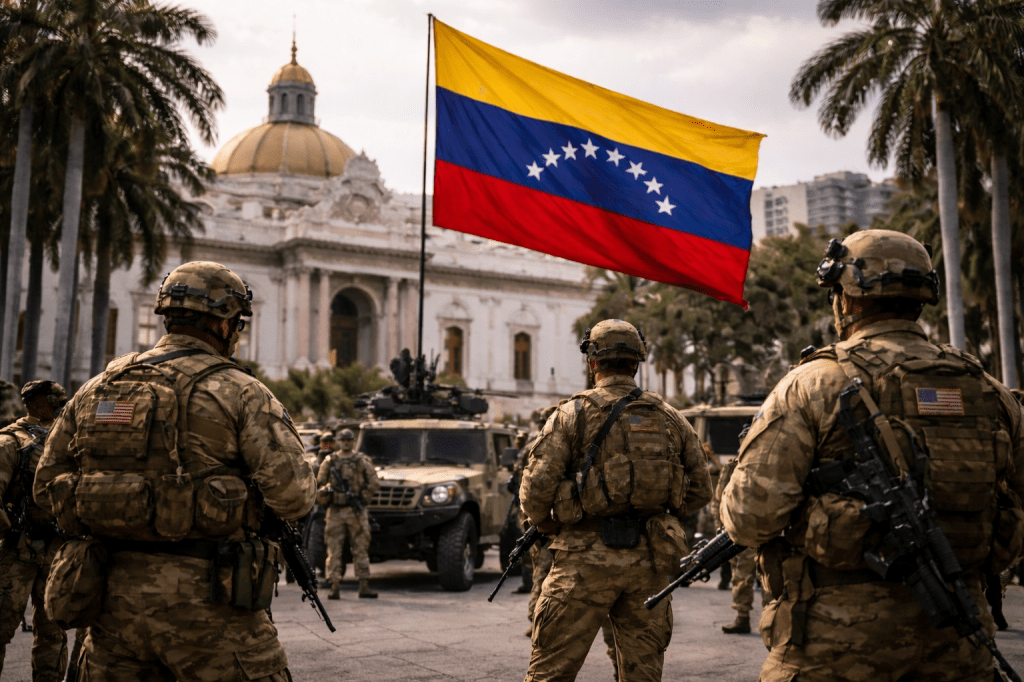
The military operation carried out by the United States against Nicolás Maduro in Venezuela constituted a pre-planned and coordinated multi-phase intervention. The operation was executed during the night of 2–3 January 2026 through a synchronized process involving military, security, and intelligence assets.
Initiation of the Operation
The final political authorization for the operation was granted on Friday night, 2 January 2026, at approximately 22:45–23:00 (U.S. Eastern Time – EST). Following this authorization, U.S. Armed Forces and federal security agencies were mobilized simultaneously, and the operation was effectively launched on Venezuelan territory in the early hours of Saturday, 3 January 2026.
The choice to conduct the operation between midnight and early morning hours reflects a classic military preference aimed at maximizing surprise and limiting the target area’s early warning and response capabilities.
Military Strikes and Area Control
During the initial phase of the operation, between 00:00 and 02:00 (EST) on 3 January 2026, air strikes were carried out against selected military targets in and around Caracas. The objective at this stage was to suppress the Venezuelan security forces’ air defense, command, and coordination capabilities and to rapidly establish operational control over the area.
Within the same time window, power outages and communication disruptions were reported in certain parts of Caracas. This phase is assessed as an area-shaping stage, conducted prior to the direct apprehension phase of the operation.
Movement Toward Maduro’s Location
Simultaneously with the air strikes, mixed teams composed of U.S. special forces and federal security elements were directed toward a secure location believed to be hosting Nicolás Maduro. It is reported that these units reached the site at approximately 01:00 (EST) on 3 January 2026, during which limited armed contact occurred.
At this stage, one of the helicopters reportedly sustained minor damage but remained operational and continued its mission.
Apprehension and Custody Phase.
Following entry into the secure location, Nicolás Maduro and his wife, Cilia Flores, were taken into custody within the 01:00–02:00 (EST) time window. According to U.S. accounts, the apprehension did not escalate into prolonged fighting, and this phase of the operation was completed relatively quickly.
This outcome underscores the critical role of pre-operation intelligence superiority and precise timing.
Exit from Venezuelan Airspace and Maritime Phase
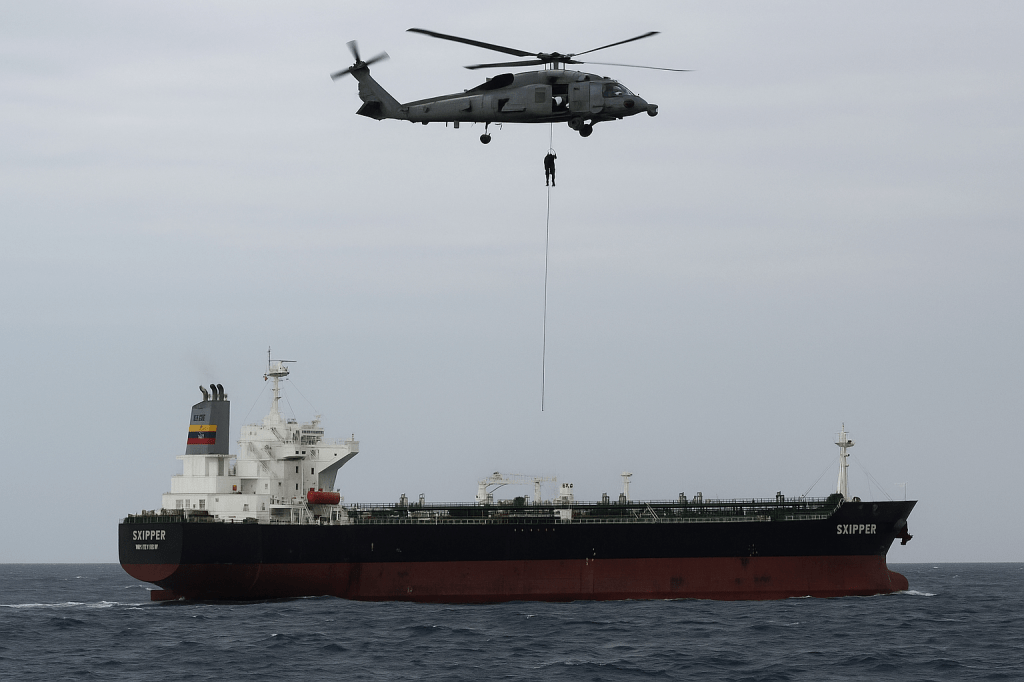
After the apprehension, special units extracted Maduro and his wife from Caracas by helicopter and transported them out of Venezuelan airspace between 03:00 and 03:30 (EST). At approximately 03:20 (EST), the helicopters reached open waters, where contact was established with U.S. Navy assets.
At this point, the operational phase on Venezuelan territory effectively ended, and the process transitioned into a maritime transfer phase.
Public Announcement and Initial Political Reactions
Immediately following the completion of the operation, the first official statement by the U.S. President was released to the public around 04:20–04:30 (EST) on 3 January 2026. With this announcement, the operation was formally confirmed and disclosed to the international community.
In parallel, Venezuelan authorities issued statements on the same day characterizing the incident as a “kidnapping” and declaring that it constituted a severe violation of state sovereignty.
Transfer to the United States and Transition to Judicial Proceedings
Following the maritime phase, Maduro and his wife were transferred to the United States during the evening hours of 3 January 2026. With this transfer, the operation ceased to be a military intervention and transitioned into a legal process under the jurisdiction of the U.S. federal judicial system. In the days that followed, it was reported that Nicolás Maduro would be brought before U.S. federal courts.
REASONS BEHİND THE OPERATION
1. Counter-Narcotics Efforts and the National Security Narrative
When presenting the operation against Venezuela to the public, the U.S. administration has highlighted the fight against drug trafficking as one of its primary justifications. According to Washington, Venezuela has for years become one of the key transit hubs along the drug trafficking routes extending from South America to North America. This situation has been framed not merely as an issue of combating organized crime, but as a matter of U.S. national security.
- Within this narrative, drug trafficking is described as:
- A threat to public health in the United States,
- A major source of financing for armed and illicit groups,
- A security risk that erodes state capacity.
Accordingly, the issue is removed from the realm of ordinary criminal law and repositioned within a securitized policy framework.
2. The “Narco-State” and “Narco-Terrorism” Framework
In U.S. political and legal discourse, Venezuela has increasingly been portrayed as a “narco-state,” while Nicolás Maduro has been framed not merely as a political leader, but as an actor allegedly embedded within transnational criminal networks. This narrative enables Maduro to be removed from the status of a legitimate head of state and redefined as a criminal actor.
Within this framework, the concept of “narco-terrorism” combines:
- Drug trafficking,
- Cooperation with armed organizations,
- Criminal structures embedded within state institutions.
By merging these elements, the concept functions as a political narrative that legitimizes the use of military and security-based instruments.
3. U.S. Federal Judicial Process: Criminal Cases Against Nicolás Maduro
One of the central elements cited by the United States in explaining and justifying the operation has been the existence of ongoing federal criminal proceedings against Nicolás Maduro within the U.S. judicial system.
However, these indictments constitute criminal proceedings under U.S. domestic law and do not, from the perspective of international law, automatically provide legal authorization for military intervention.
4. Policy of Non-Recognition of Regime Legitimacy
The United States has for a prolonged period explicitly stated that it does not recognize the Maduro administration as the legitimate government of Venezuela. This policy of non-recognition plays a significant role in the justification of the operation. According to Washington, the leader of a government that is not recognized as legitimate:
- Cannot benefit from head-of-state immunity,
- Possesses a contested status under international law,
- May become the target of criminal investigations.
Although this approach does not produce binding legal consequences under international law, it allows the U.S. to frame the operation domestically not as an “attack against a sovereign state,” but as an intervention against an unlawful structure.
5. Domestic Politics and the Congress–Executive Balance
U.S. domestic politics has also played a decisive role among the reasons behind the operation. The Venezuela file has long been an area in which:
- Both political parties in Congress have adopted a hardline stance,
- Latin American diaspora communities particularly in Florida have exerted political influence,
- The boundaries of presidential authority have been actively tested.
Within this context, the operation is associated not only with foreign policy or security rationales, but also with efforts to demonstrate political resolve, project toughness, and expand the executive branch’s room for maneuver.
6. Geopolitical Signaling and Deterrence
Finally, geopolitical signaling and deterrence constitute another core motivation behind the operation. From the U.S. perspective, Venezuela is not merely a Latin American country, but also a state that has developed close relations with actors such as Russia, China, and Iran.
In this context, the operation can be interpreted as part of a broader strategic framework aimed at:
- Reasserting U.S. power projection in Latin America, traditionally viewed as its sphere of influence,
- Drawing clear boundaries for rival global actors,
- Delivering a message of “vulnerability” and demonstrated reach to regimes perceived as hostile.
INTERNATIONAL REACTIONS ON THE U.S. MILITARY OPERATION IN VENEZUELA
China
Argentina
Argentine President Javier Milei openly signaled support for the outcome of the U.S. operation in Venezuela through an official X post, writing: “Liberty advances. ¡Viva la libertad, carajo!”
Panama
Panamanian President José Raúl Mulino, in an official statement on developments in Venezuela, reiterated his government’s support for democratic legitimacy and the will of the people. Mulino emphasized that Edmundo González was elected through legitimate elections and that Panama supports a peaceful and orderly transition process.
Russia
Mexico
Brazil
Brazilian President Luiz Inácio Lula da Silva condemned the U.S. bombardment of Venezuela and the capture of Nicolás Maduro, stating that these actions crossed an “unacceptable line” and amounted to a severe attack on Venezuela’s sovereignty.
Colombia
Colombian President Gustavo Petro described the U.S. operation in Venezuela as a direct attack on sovereignty. He called for the immediate convening of the United Nations and the Organization of American States, arguing that the crisis must be resolved through diplomacy rather than military means.
Cuba
Cuban President Miguel Díaz-Canel described the U.S. military action against Venezuela as a “criminal attack” and an act of “state terrorism,” warning that it undermines the “Zone of Peace” status of Latin America and the Caribbean. He urged the international community to respond urgently, arguing that such interventions severely threaten regional peace.
Iran
France
French Foreign Minister Jean-Noël Barrot stated that the U.S. military operation violated international law and the UN Charter’s principle of non-use of force. He emphasized that no political solution can be imposed externally and reiterated the importance of respecting peoples’ right to self-determination.
Germany
Germany stated that it was closely monitoring the situation. The Foreign Ministry urged all parties to avoid escalation, respect international law, and pursue a political solution. Chancellor Friedrich Merz added that the legal assessment of the operation is complex and should be addressed within an international legal framework.
Spain
Canada
United Kingdom
British Prime Minister Sir Keir Starmer stated that the United Kingdom was not involved in the U.S. operation in Venezuela and emphasized that protecting international law and ensuring the safety of British citizens remain key priorities. He noted that developments are being closely followed while awaiting full clarification of the facts.
Ukraine
Ukrainian Foreign Minister Andrii Sybiha stated that Ukraine does not recognize Nicolás Maduro’s leadership as legitimate and reaffirmed Ukraine’s support for democracy, human rights, and peaceful solutions grounded in international law.
Greece
Greece’s Ministry of Foreign Affairs stated that it is closely monitoring developments in Venezuela in coordination with EU partners. Prime Minister Kyriakos Mitsotakis criticized Maduro’s long-standing authoritarian rule while emphasizing the need to focus on a peaceful, democratic transition rather than a legal assessment of the military action.
Türkiye
Israel
Israeli Foreign Minister Gideon Sa’ar welcomed and praised the U.S. operation and the capture of Nicolás Maduro, describing the United States as the “leader of the free world.” He characterized the Maduro government as illegal and repressive and expressed hope that the Venezuelan people’s democratic rights would be upheld.
India
India adopted a cautious stance, stating that it is closely monitoring developments, urging restraint, and emphasizing the importance of respecting international law. The Ministry of External Affairs did not issue a separate written press release on the matter.
South Africa
South Africa’s Department of International Relations and Cooperation opposed the use of force and unilateral interventions, stressing respect for the UN Charter and international law and calling for dialogue and diplomacy.
United Nations
The United Nations described the U.S. military operation as deeply concerning. UN Secretary-General António Guterres urged all parties to respect international law and the UN Charter and called for immediate de-escalation. UN human rights officials emphasized the protection of civilians, while the UN Security Council was reported to be moving to address the situation.
LEGAL ASSESSMENT
1. Assessment from the Perspective of International Law
From the standpoint of international law, the use of military force by the United States on Venezuelan territory and the forcible capture of the head of state clearly conflict with fundamental legal norms. This assessment can be made on the basis of the following points:
- Prohibition of the Use of Force (UN Charter Art. 2/4): The use of force by states against the territorial integrity or political independence of another state is prohibited. The military operation against Venezuela constitutes a direct violation of this prohibition.
- Absence of the Conditions for Self-Defense (UN Charter Art. 51): As there has been no armed attack originating from Venezuela against the United States, the exception of self-defense is not legally applicable.
- Lack of United Nations Security Council Authorization: There is no United Nations Security Council decision or authorization regarding the operation. This renders the intervention unauthorized under international law.
- Violation of the Principles of Sovereignty and Non-Intervention: The forcible capture of a head of state by a foreign power amounts to the suspension of the sovereign powers of the state and direct intervention in the regime.
- Violation of the Personal Immunity of Heads of State: Under customary international law, serving heads of state enjoy immunity from the jurisdiction of foreign states. Criminal allegations do not remove this immunity.
- Bypassing of International Criminal Justice: The criminal responsibility of heads of state is addressed through international judicial mechanisms. A unilateral military apprehension bypasses this process. As a result, from the perspective of international law, this intervention constitutes unlawful use of force, a serious violation of sovereignty, and a prohibited intervention.
2. Assessment from the Perspective of United States Domestic Law
From the perspective of U.S. domestic law, the operation presents a more complex and controversial framework.
- Lack of Congressional Authorization: There is no specific and explicitly named congressional authorization (AUMF) for the arrest of Nicolás Maduro or for the use of military force in Venezuela.
- Broad Interpretation of the AUMFs: The U.S. administration seeks to justify the operation by broadly interpreting the 2001 and 2002 AUMFs within the framework of counterterrorism. However, these authorizations do not explicitly cover a military operation against the leader of a sovereign state.
- Limited Judicial Basis: Indictments issued by U.S. federal prosecutors and the “Rewards for Justice” program do not confer authority to conduct an extraterritorial apprehension through the use of military force. U.S. courts cannot issue orders for military operations on the territory of a foreign state.
- Presidential Authority and Constitutional Limits: While the President’s commander-in-chief authority is extensive, the use of military force at a level that creates inter-state conflict falls, under the Constitution, within the authority of Congress. For these reasons, the operation rests on a legally controversial foundation even within U.S. domestic law, particularly with regard to constitutional limits on authority.
3. Assessment from the Perspective of Venezuelan Domestic Law
From the perspective of Venezuelan domestic law, the situation is clear and not open to dispute:
- Violation of the Constitutional Order: The head of state may be removed from office only through constitutional mechanisms within the country. Intervention by a foreign military force constitutes the forcible overthrow of the constitutional order.
- Attack on Sovereignty and National Independence: The operation is regarded under Venezuelan law as a direct attack on state sovereignty and an act of occupation.
- Constitution of a Crime Against the State: Foreign intervention falls within the category of crimes such as coup d’état, overthrow of the constitutional order, and crimes against national independence.
PRECEDENT VALUE AND IMPLICATIONS FOR THE INTERNATIONAL SYSTEM
The military operation carried out by the United States in Venezuela, resulting in the forcible apprehension of a sitting head of state, is widely regarded as a precedent-setting development that affects not only bilateral relations but also the foundational norms of the international system and the established principles governing the use of force. This intervention has reopened debates surrounding the legal and institutional balance that states have long sought to preserve in international relations.
Erosion of the Principle of Head of State Immunity
Under international customary law and established diplomatic practice, sitting heads of state enjoy personal immunity from the jurisdiction of foreign states. By forcibly capturing a head of state through the direct use of military force, the United States has created a powerful example suggesting that such immunity may be bypassed in practice.
This development carries the risk that other states may, in the future, define foreign leaders as “criminal actors” under similar justifications and pursue unilateral interventions. While the erosion of immunity may provide greater operational latitude to powerful states in the short term, it risks undermining the security of political leadership worldwide in the long term.
The Legalization of the Use of Force Debate
The attempt to justify the operation on the basis of criminal investigations and federal indictments represents a striking example of the framing of military force as a legal enforcement tool. This approach stands in direct tension with the United Nations Charter system, which was designed to strictly limit the use of force.
If states begin to regard domestic criminal proceedings as sufficient grounds for military intervention within the territory of another sovereign state, this could lead to the erosion of collective security mechanisms and the selective application of international law.
Unilateralism and the Erosion of Collective Security
Because the intervention was conducted without authorization from the United Nations Security Council, it constitutes a clear example of unilateral use of force. This development risks further weakening the principle of collective security and reinforcing a system in which de facto power superiority overrides established legal norms.
The erosion of collective security disproportionately affects small and medium-sized states by reducing predictability within the international system, increasing security anxieties, and deepening dependence on alliances.
Consequences for Great Power Competition
The precedent-setting nature of the operation is being closely observed within the context of great power rivalry. Actors such as Russia and China may interpret this intervention as a reference point for their own security doctrines. This raises the risk that the concept of “legally justified military intervention” may be replicated across different regions.
In this respect, the operation should be understood not merely as a Latin American case, but as one carrying the potential for dangerous ripple effects in regions of heightened tension such as the Asia-Pacific, Eastern Europe, and the Middle East.
Overall Assessment from the Perspective of the International System
In conclusion, beyond any short-term strategic gains, the U.S. operation in Venezuela constitutes a precedent capable of leaving lasting marks on the normative structure of the international system. The blurring of boundaries between state sovereignty, immunity, use of force, and jurisdiction carries the risk of rendering the international order more unpredictable and fragile.
For this reason, the intervention should be assessed not only within the specific contexts of Venezuela and the United States, but also as a critical turning point for the future of international law and systemic stability.
CONCLUSION
The military operation carried out by the United States in Venezuela and the subsequent apprehension of President Nicolás Maduro constitutes a multi-layered and exceptional case from the perspectives of international relations and international law. The intervention reflects an approach in which military methods, criminal law justifications, and strategic objectives are intertwined, thereby presenting a model that differs from conventional forms of interstate use of force.
An examination of the sequence and implementation of the operation indicates that the process was conducted in a pre-planned, coordinated, and time-sensitive manner. While the reasons put forward by the United States were grounded in counter-narcotics efforts, national security concerns, and ongoing federal criminal cases, significant disagreements emerged at the international level regarding the legal validity of these justifications. In particular, the absence of authorization from the United Nations Security Council has positioned the operation as a central point of debate concerning the prohibition on the use of force and the principle of state sovereignty.
International reactions demonstrate the lack of a common and uniform approach within the global system toward interventions of this nature. Whereas some states supported the operation, a substantial number openly condemned it and emphasized that it constituted a violation of international law. This divergence has once again exposed persistent structural challenges related to the normative coherence and enforcement capacity of the current international order.
From a legal assessment perspective, the operation has been subject to differing—and at times conflicting—interpretations under international law, U.S. domestic law, and Venezuelan domestic law. Within the framework of international law, the principles of sovereignty, the prohibition of the use of force, and the immunity of heads of state come to the forefront. In the context of U.S. domestic law, debates have centered on executive authority, federal criminal investigations, and the balance between Congress and the presidency. From the standpoint of Venezuelan domestic law, the intervention has been regarded as a violation of the constitutional order and national sovereignty.
Finally, the precedent value of this operation carries the potential to generate long-term and systemic consequences extending beyond the immediate crisis. Issues such as the status of heads of state, the boundaries between domestic and international law, and the normalization of unilateral use of force are likely to shape future cases of a similar nature. In this respect, the Venezuela case serves as a significant reference point for understanding how the existing rules of the international system are interpreted and how they may evolve in the future.

 Ahmet Tümer